
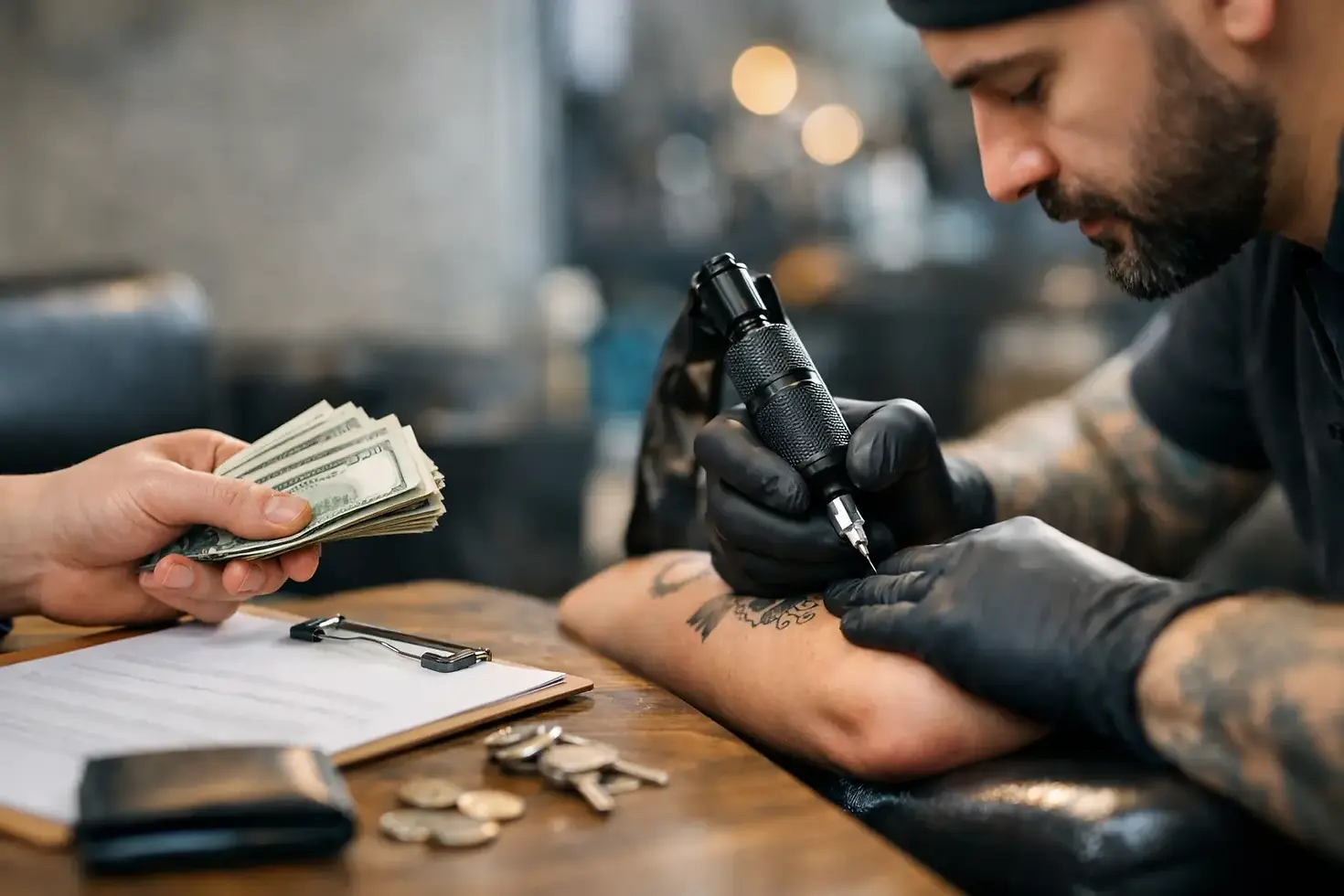
Tattoo Deposit Policy Explained Clearly

A proper tattoo deposit policy usually matters most when someone wants to move an appointment at short notice. That is the point where expectations either stay clear, or everything gets messy. If you are booking a custom tattoo, especially something detailed, personal or time-heavy, the deposit is not a random extra. It is part of how a serious studio protects the work before the machine is even switched on.
For some clients, deposits can feel frustrating at first. That is understandable. You are paying before the tattoo is finished, and sometimes before you have seen the final design. But from the studio side, that deposit covers real time, planning and commitment. No rushing. No guesswork. Just a clear agreement so both sides know where they stand.
What a tattoo deposit policy is really for
A tattoo deposit policy sets the terms for booking. It explains what must be paid to secure your slot, whether that amount comes off the final price, and what happens if you need to cancel or reschedule.
At a good studio, it does more than protect the diary. It protects the design process too. Custom tattooing is not off-the-shelf work. Before the appointment, an artist may spend time reviewing references, planning placement, drawing up concepts, adjusting scale and preparing for your session. That effort is part of the job, even if it happens before you walk through the door.
This is especially true for portraits, memorial pieces, fine line work and larger black and grey sessions. The more personal and technical the piece, the more preparation usually sits behind it.
Why studios take deposits
The simplest reason is commitment. When a studio blocks out time for you, that time cannot be offered to somebody else. If a client cancels too late or does not turn up, the artist loses hours that were reserved specifically for that booking.
Deposits reduce that risk, but they also filter out casual enquiries from genuine bookings. There is a difference between asking about a tattoo and being ready to book one. A deposit marks that difference clearly.
For a private, appointment-led studio, this matters even more. The environment is built around focus, not volume. Artists are not trying to squeeze in as many people as possible. They are planning work properly, giving each piece the right amount of time and protecting a calmer client experience. A solid tattoo deposit policy supports that standard.
What a deposit usually covers
In most cases, the deposit goes towards the final cost of the tattoo. It is not usually an extra fee on top, although the exact amount can vary depending on the size of the piece, the length of the session and the artist involved.
What it covers behind the scenes depends on the booking. Sometimes it helps account for consultation time and drawing time. Sometimes it secures a half day or full day slot that would be difficult to refill at the last minute. Sometimes it protects a specialist booking that requires more preparation than a small, straightforward piece.
That is why a £50 deposit for a small script tattoo and a larger deposit for a full-day realism session are not the same thing. The policy should reflect the scale of the work.
Tattoo deposit policy and design previews
One of the biggest misunderstandings around deposits is the design stage. Some clients expect a finished design days in advance because they have already paid a deposit. Others worry that paying a deposit means they lose the right to ask for changes.
Neither assumption is quite right.
A deposit secures the work and allows the artist to begin preparing. It does not mean the artist has to send completed artwork far in advance, particularly for custom pieces. Many studios prefer to finalise designs closer to the appointment so the work stays protected, fresh and tied to the agreed brief.
At the same time, a deposit should not shut down collaboration. If your tattoo is meaningful, placement-specific or based on a personal reference, there should still be room to refine it. The key is being clear from the start about what you want, what style suits it and how much flexibility there is within the brief.
When deposits are usually non-refundable
Most tattoo deposit policy terms treat deposits as non-refundable. That is standard practice, not a warning sign. If the artist has reserved the time and started preparing for the session, the deposit has already served its purpose.
The most common reasons a deposit is kept include cancelling with too little notice, not turning up, repeatedly moving the booking, or changing the idea so much that the original appointment no longer makes sense.
This can feel strict, but context matters. If an artist has held a Saturday slot, turned away other bookings and spent part of the week planning your piece, a late cancellation has a real cost. The deposit helps cover that loss.
When a deposit can be transferred
A fair tattoo deposit policy often allows one transfer if enough notice is given. That gives clients some flexibility without leaving the studio exposed. Life happens. People get ill, childcare falls through, work shifts change. Reasonable notice usually gives the studio a chance to move things around.
The exact notice period varies, but what matters is that it is stated clearly. If the studio says at least 48 or 72 hours, that should be respected. If you know sooner, say sooner. Last-minute silence creates most of the problems.
A transfer is not the same as a refund. In many cases, the deposit can move with your appointment once, but not be returned to you in cash. That is a normal middle ground.
Why first-time clients should not see deposits as a red flag
If you have never booked a tattoo before, being asked for a deposit can feel like pressure. It is not. In a professional setting, it is a sign that bookings are taken seriously.
Studios with no structure around deposits often end up chaotic. Appointments move constantly, artists lose time, and clients get inconsistent communication. A clear process tends to mean better planning, cleaner scheduling and fewer surprises.
For first-timers, the better question is not, “Why do they want a deposit?” It is, “Have they explained the policy properly?” If the answer is yes, that is usually a good sign.
What clients should check before paying
Before sending any money, make sure you understand the basics. How much is the deposit? Does it come off the final price? How much notice is needed to move the booking? Is it refundable in any situation? What happens if the artist needs to reschedule?
You do not need a legal lecture. You just need clarity.
A good studio will explain this in direct terms, without burying it in vague wording. That matters because deposit disputes are rarely about the amount. They usually happen because someone assumed one thing and the studio meant another.
What makes a fair tattoo deposit policy
Fair does not mean soft. It means clear, consistent and proportionate.
If a studio keeps every deposit under every circumstance, clients will understandably question it. Equally, if clients can cancel whenever they like and expect their money back in full, the booking system stops working. The right policy protects both sides.
That usually means the deposit is deducted from the tattoo price, the cancellation window is clearly stated, one sensible transfer may be allowed, and exceptions are handled with common sense rather than guesswork. It also means the studio applies the same standards consistently instead of making it up as they go.
In a craft-led space, that consistency matters. Trust is not built by being vague. It is built by being clear before the appointment, steady during the process and fair when plans change.
Tattoo deposit policy for custom and larger work
The bigger the piece, the more important the policy becomes. A small walk-in style tattoo and a multi-session custom project do not carry the same level of planning. Larger work often involves consultation, reference gathering, drawing time, scheduling across multiple dates and detailed preparation around placement and flow.
That is why bigger projects may involve a higher deposit or a staged booking structure. It is not about making the process harder. It is about matching the commitment to the work involved.
Studios such as Kartel Collective, where the focus is on bespoke work and artist matching, rely on that structure to keep standards high. If the design has to be right, the booking process has to be right too.
A deposit should never feel like a penalty for getting tattooed. It should feel like part of a professional agreement. You commit to the appointment. The studio commits to the time, preparation and care your piece deserves.
If you are booking a tattoo that matters to you, that clarity is worth having from the start. It gives the process shape, protects the artist's time and helps keep your appointment moving forward without confusion. That is not red tape. It is respect for the work.


Comments